InviDx® System
Item No.: 5001200099
Highlights:
- Compact molecular testing instrument: isothermal amplification and colorimetric detection of multiple targets in parallel, with automated software-assisted result interpretation.
- Parallel detection of multiple targets: Test kits enable simultaneous detection of predefined pathogens or antimicrobial resistance-gene markers.
- Rapid results in minutes: Complete workflows from sample collection to result in less than 60 minutes, everywhere.
- Flexible and decentralized testing: research workflows across human health, veterinary, environmental, and other decentralized testing settings.
- Automated result interpretation: standardized result interpretation and centralized data management via the InviDx® Hub.
Product Details
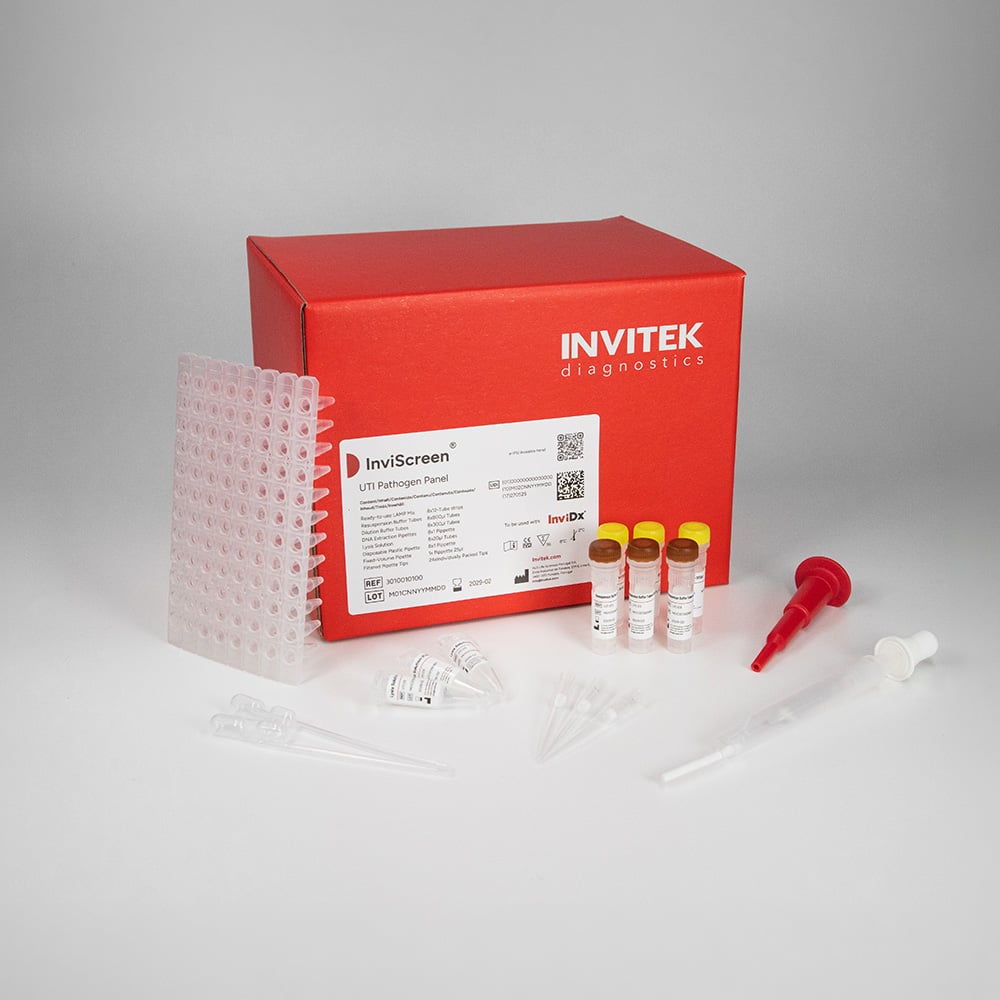
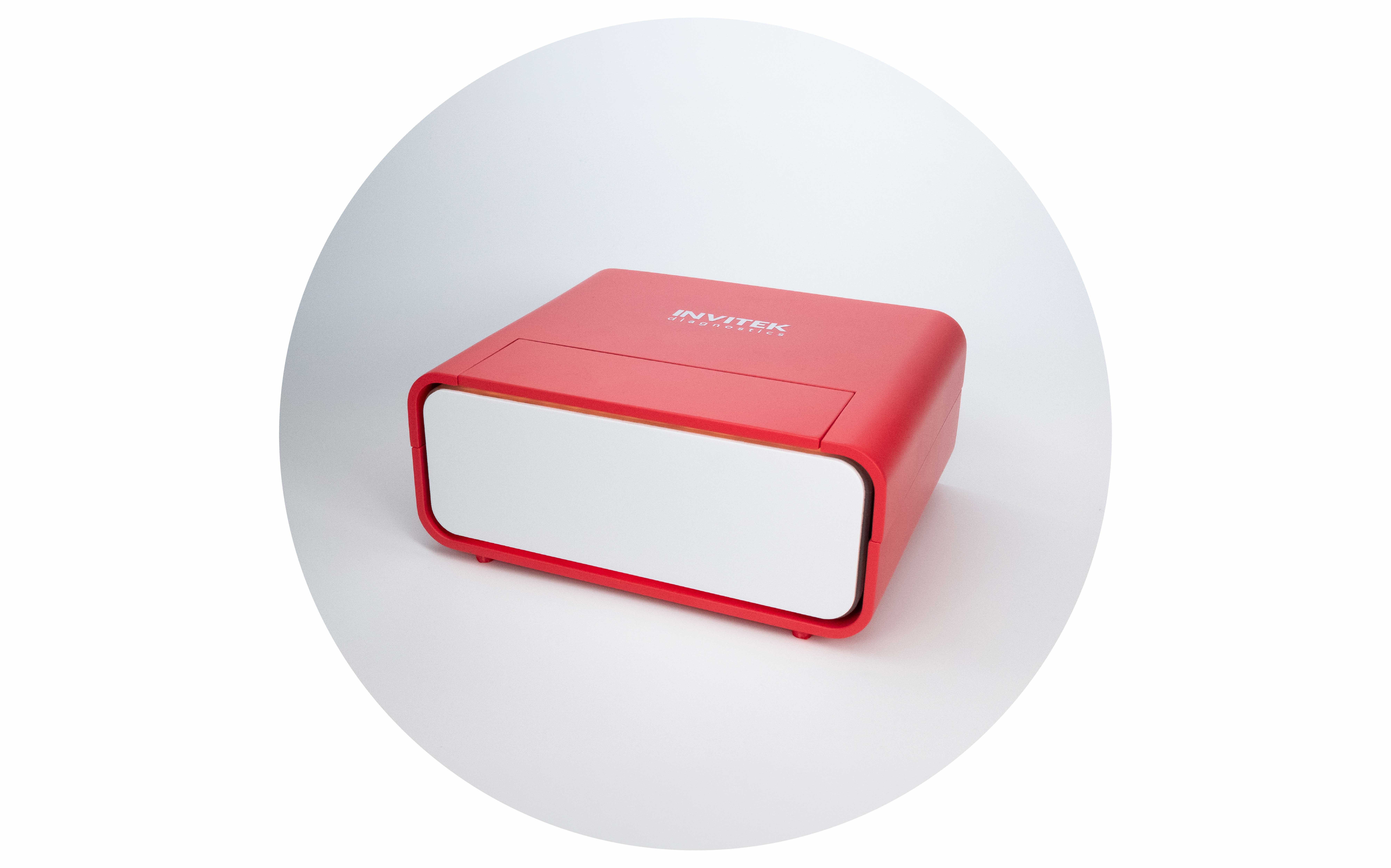
The InviDx® System is a modular molecular testing platform designed for rapid nucleic acid detection in decentralized testing environments. It combines the compact InviDx® instrument with specialized test kits for sample collection, preparation and target detection. Each test kit provides assay-specific reagents and instructions, while the InviDx® instrument performs nucleic acid amplification, colorimetric-based detection, and automated result interpretation.
The available test kits allow the parallel detection of up multiple predefined targets, with the complete workflow from sample collection to result designed to take less than 60 minutes.
The InviDx® instrument’s compact footprint and streamlined workflow support flexible deployment across a range of decentralized testing environments. Results generated by the instrument are presented and analysed using the InviDx® Hub, a web-based application that provides automated result analysis, standardized result interpretation, and centralized management of testing data.
Technology
InviDx® Instrument
The InviDx® Instrument is a compact and easy-to-deploy molecular testing platform designed for rapid nucleic acid detection in decentralized environments. It uses isothermal amplification technology to amplify multiple predefined targets in parallel, eliminating the need for conventional thermal cycling. Targets are detected in 30 to 45 minutes using colorimetric detection, and results are automatically interpreted by the InviDx® Hub web app.
InviDx® Test Kits
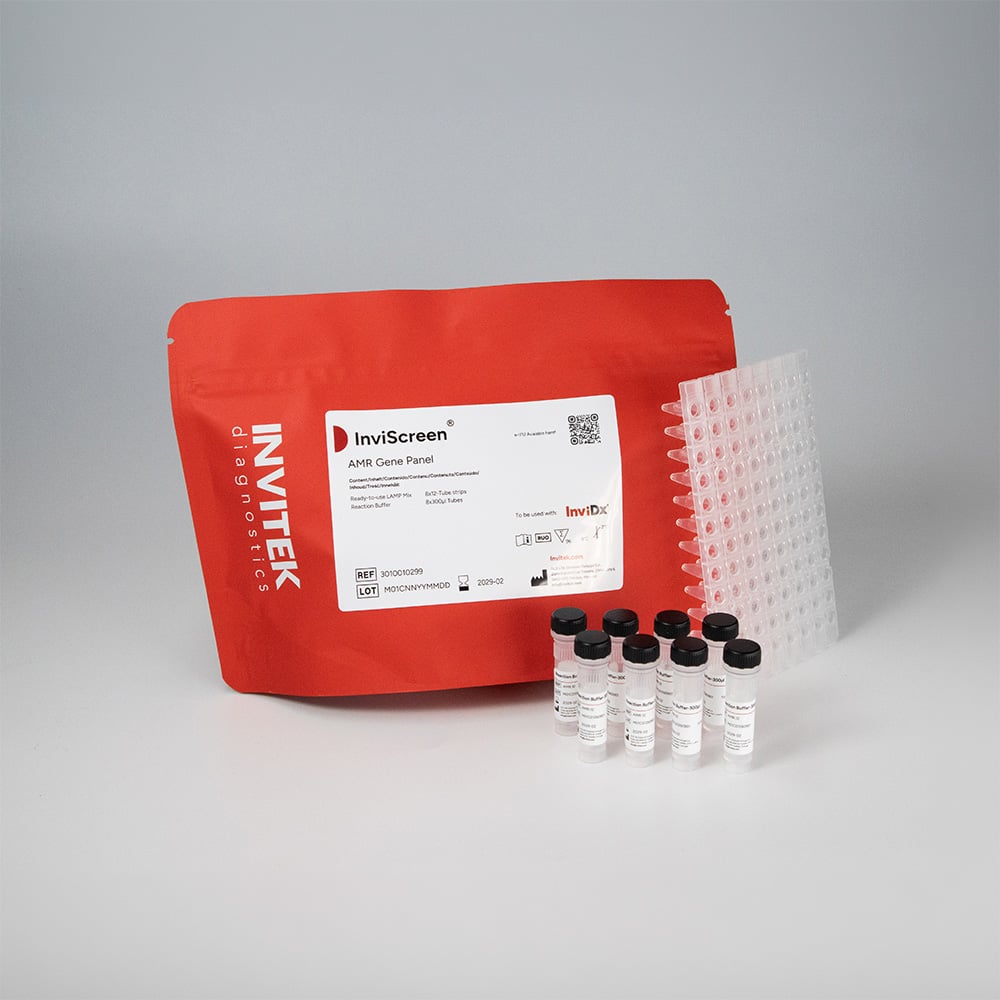
InviDx® Test Kits combine assay-specific reagents and instructions in a streamlined format to simplify decentralized molecular testing. Each kit contains prefilled 12-well reaction strips, with each strip intended for the analysis of a single sample. The strips contain lyophilized, predefined singleplex or multiplex LAMP reaction mixes, enabling the simultaneous detection of multiple targets in one run. Integrated positive and negative controls support reliable quality control without the need for additional control materials.
InviDx® Hub
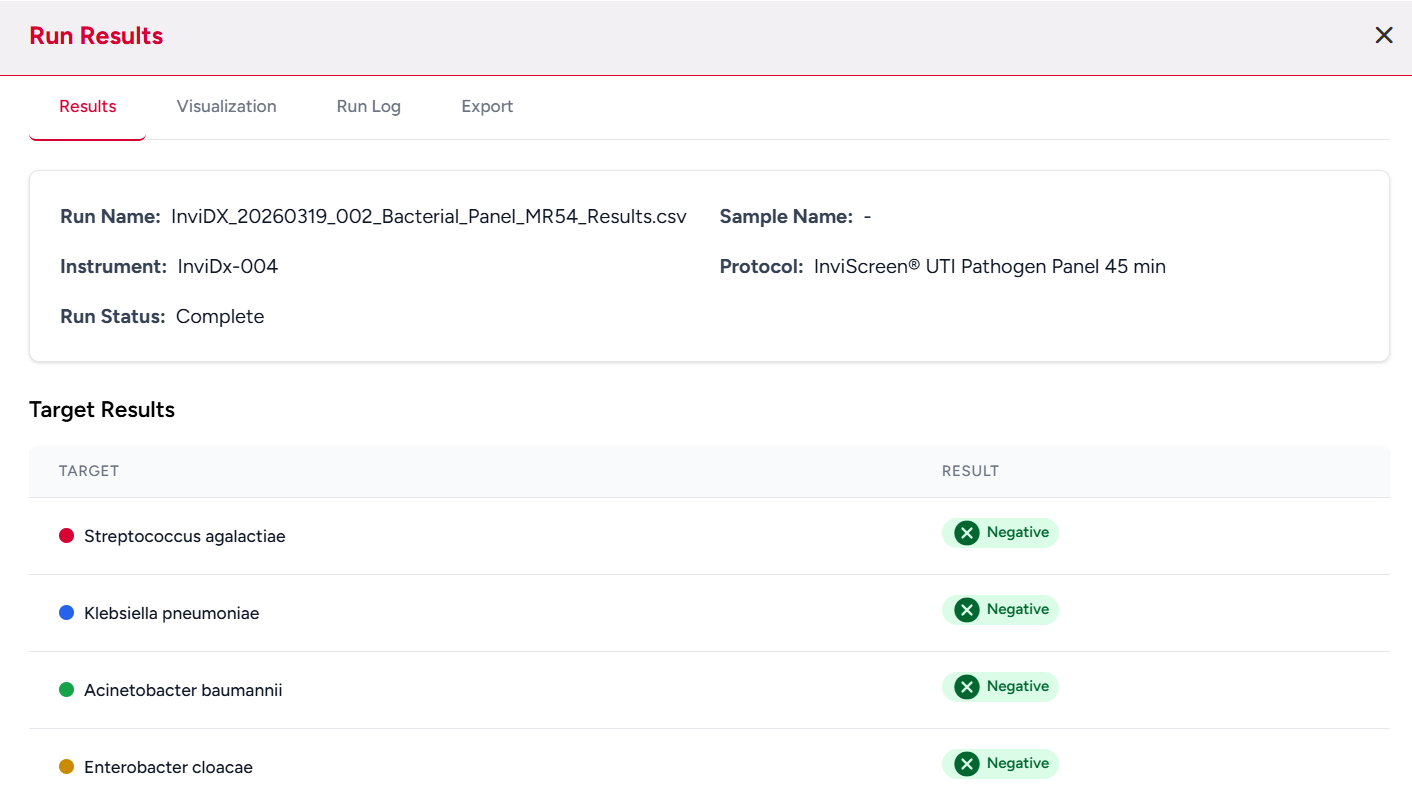
The InviDx® Hub is a web-based application for automated result analysis, standardized interpretation, and centralized data management. It transforms instrument-generated data into clear, actionable results while supporting efficient oversight across decentralized testing workflows.
| Specifications | |
|---|---|
| Technology | Loop-mediated Isothermal Amplification (LAMP), colorimetric detection, automated result interpretation |
| Throughput level | Low |
| Wells | 12 |
| Samples per run | 1, depending on test kit |
| Targets per sample | Up to 10 single or multiplexed target reactions (depending on test kit), plus positive and negative control |
| Certification | RUO |
Resources

Instructions for use - InviDx® System
8 SEP 2026
Ordering Details
| Product Name | Catalogue No. |
|---|---|
| InviDx® System | 5001200099 |
Technical Details
-
InviDx® System
Product Name Catalogue No. Model InviDx® Instrument Software InviDx® Hub, web-based application Amplification Loop-mediated Isothermal Amplification (LAMP) Detection Colorimetric optical monitoring Result type Automated qualitative interpretation Reaction Format 12-well strip / one sample per run Typical Run Time 30-45 minutes, assay dependent Operating Temperature 15-30 °C Relative Humidity 30-75 %, non-condensing Dimensions 18 x 15 x 8 cm (L x W x H) Weight 850 g Connectivity Wi-Fi and Ethernet
FAQs
-
1. What is the InviDx® System?
The InviDx® System is a modular molecular testing platform that combines a compact instrument, assay-specific test kits and web-based software. It uses isothermal amplification and colorimetric detection to analyse multiple predefined targets in parallel, with automated result interpretation through the InviDx® Hub.
-
2. How does the InviDx® System work?
The system uses 12-well reaction strips provided with the specialized test kits. After sample preparation, the reaction strip is loaded into the InviDx® Instrument, which performs isothermal nucleic acid amplification and monitors the reaction through image capture. The InviDx® Hub then processes the run data and provides automated qualitative result interpretation.
-
3. What technology does the InviDx® System use?
The InviDx® System uses loop-mediated isothermal amplification, or LAMP, together with colorimetric-based detection. This enables rapid molecular testing in a streamlined workflow without the complexity typically associated with conventional PCR systems.
-
4. What are the main benefits of the InviDx® System?
Key benefits include fast turnaround time, straightforward workflow, compact footprint, automated result interpretation, and suitability for decentralized near-patient testing settings. The system is designed to make molecular testing more accessible while supporting traceability and standardized result handling.
-
5. How fast is the InviDx® System?
The amplification and detection phase typically runs in about 30 to 45 minutes , depending on the assay. Complete workflows from sample collection to result can be completed in less than 60 minutes with applicable test kits.
-
6. What kind of consumables does the InviDx® System use?
The system uses specialized 12-well reaction strips with lyophilized reaction components supplied as part of the compatible test kits. These strips are pre-configured for the specific assay and are designed to support target detection together with the required assay controls.
-
7. How many samples can be tested per reaction strip?
In general, one 12-well reaction strip is used for one sample. This is because the currently available test kits are designed to use the wells within a strip for multiple assay targets and controls for that single sample.
-
8. How are the 12 wells typically used?
A typical 12-well reaction strip is configured to allow testing of a panel of up to 10 different target reaction wells, plus one positive control and one negative control.Target reaction wells can contain either singleplex or multiplex LAMP reactions, enabling parallel testing of multiple targets in one run. This layout supports comprehensive single-sample testing with built-in control verification in the same strip.
-
9. How many targets can InviDx® detect in parallel?
The available test kits support parallel detection of multiple predefined targets in 10 individual target reaction wells. Each target reaction well can consist of single- of multiplexed LAMP reactions, allowing the parallel detection of multiple targets. The exact number of different targets depends on the selected test kit.
-
10. Which test kits are compatible with the InviDx® System?
The system is designed for use with compatible InviScreen® test panels developed and validated for the platform. Examples include the InviScreen® UTI Pathogen Panel for detection of urinary tract infection (UTI) associated pathogens and the InviScreen® AMR Gene Panel for detection of antimicrobial resistance (AMR) gene markers.
-
11. What can the InviDx® System be used to detect?
Depending on the test kit, the system can be used to detect predefined pathogens or antimicrobial resistance gene targets. The exact target menu and specimen requirements depend on the selected assay panel.
-
12. Can the InviDx® System be used for antimicrobial resistance testing?
Yes. When used with the InviScreen® AMR Gene Panel, the system can support detection of ten different antimicrobial resistance gene markers. This makes it a valuable platform for workflows where rapid resistance-related information is important.
-
13. Where can the InviDx® System be used?
The InviDx® System is designed for decentralized and near-patient testing environments. Its compact design supports flexible deployment in laboratories and other appropriate testing settings.
-
14. Is the InviDx® System suitable for decentralized testing?
Yes. The system is specifically designed to support decentralized and patient-near molecular testing by combining compact hardware, simplified workflow, web-based software access, and automated result interpretation.
-
15. What is the InviDx® Hub?
The InviDx® Hub is a web-based application used for instrument access, run setup, monitoring, result processing, run history review, and report export. It also supports centralized data management and user-based access control.
-
16. Does the InviDx® System require software installation?
No. The InviDx® Hub is web-based and does not require installation from an app store. Users can access it through a supported web browser on a compatible device.
-
17. Does the InviDx® System need an internet connection?
An internet connection is required for synchronization, result processing, reporting, and storage of run records in the InviDx® Hub. Temporary loss of internet connectivity during a run does not stop the run itself, but reconnection is needed to complete synchronization and archive the result.
-
18. How are results interpreted?
Results are interpreted automatically by the InviDx® Hub using assay-specific analysis rules. The system provides qualitative output based on the selected test protocol and the performance of the associated controls.
-
19. Can the InviDx® System be used for clinical diagnostics?
No. The InviDx® System is currently designated for Research Use Only (RUO) applications and can be used for research workflows across human health, veterinary, environmental, and other settings. It is not intended or approved for use in human clinical diagnostics.
-
20. Who can use the InviDx® System?
The InviDx® System is designed for trained personnel conducting Research Use Only workflows in decentralized environments. Potential research settings include human health research, veterinary research, environmental surveillance and other One Health applications.