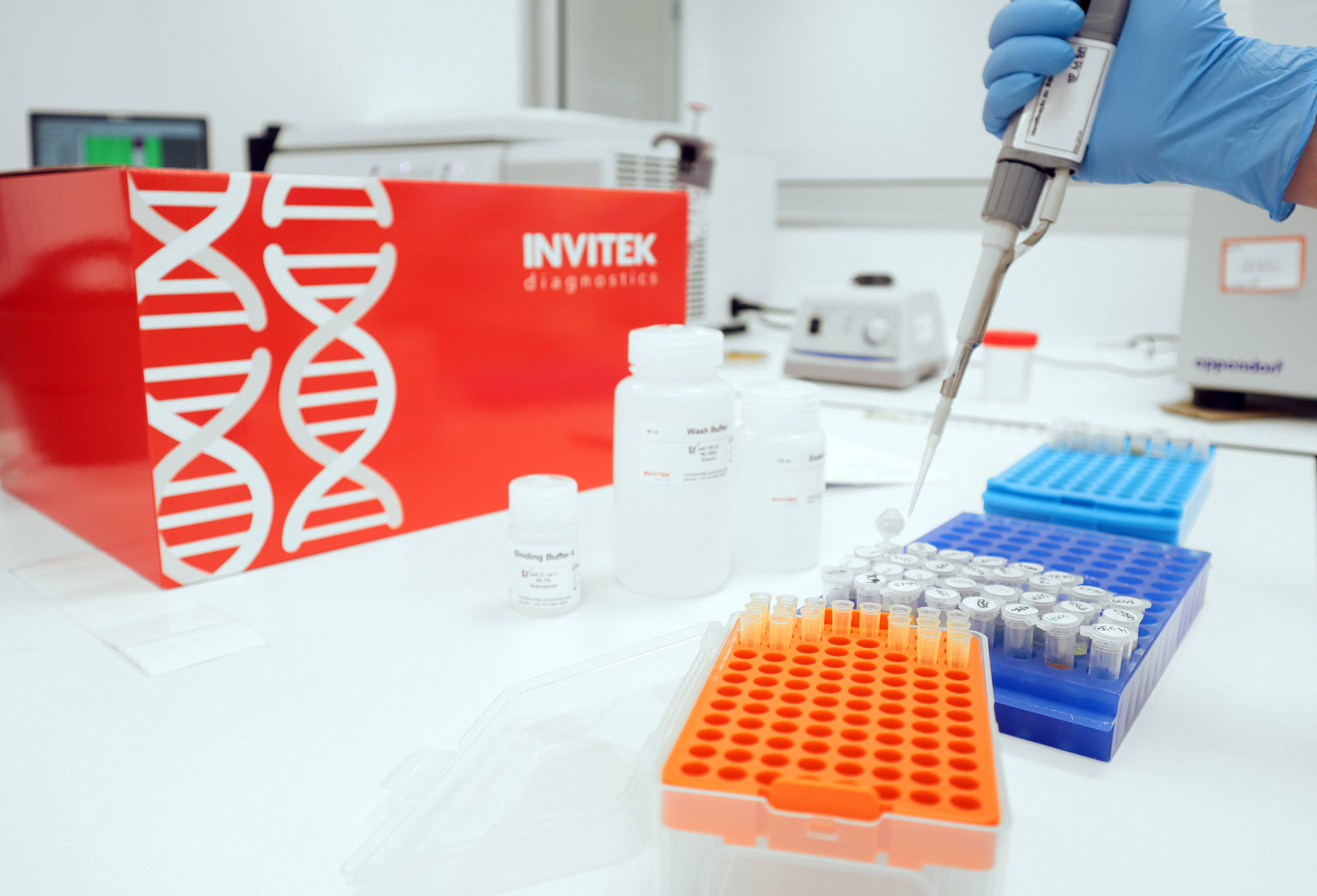
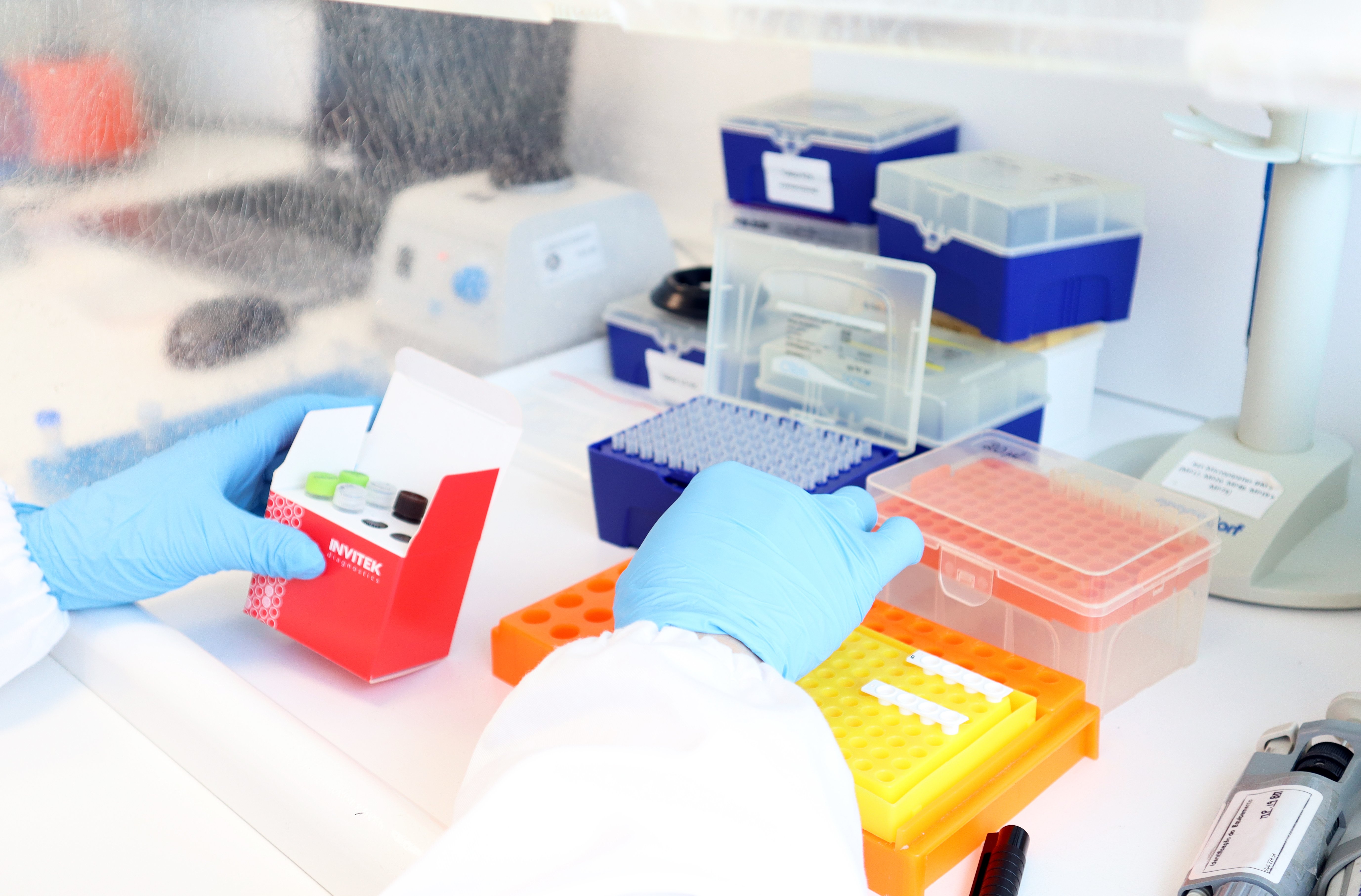
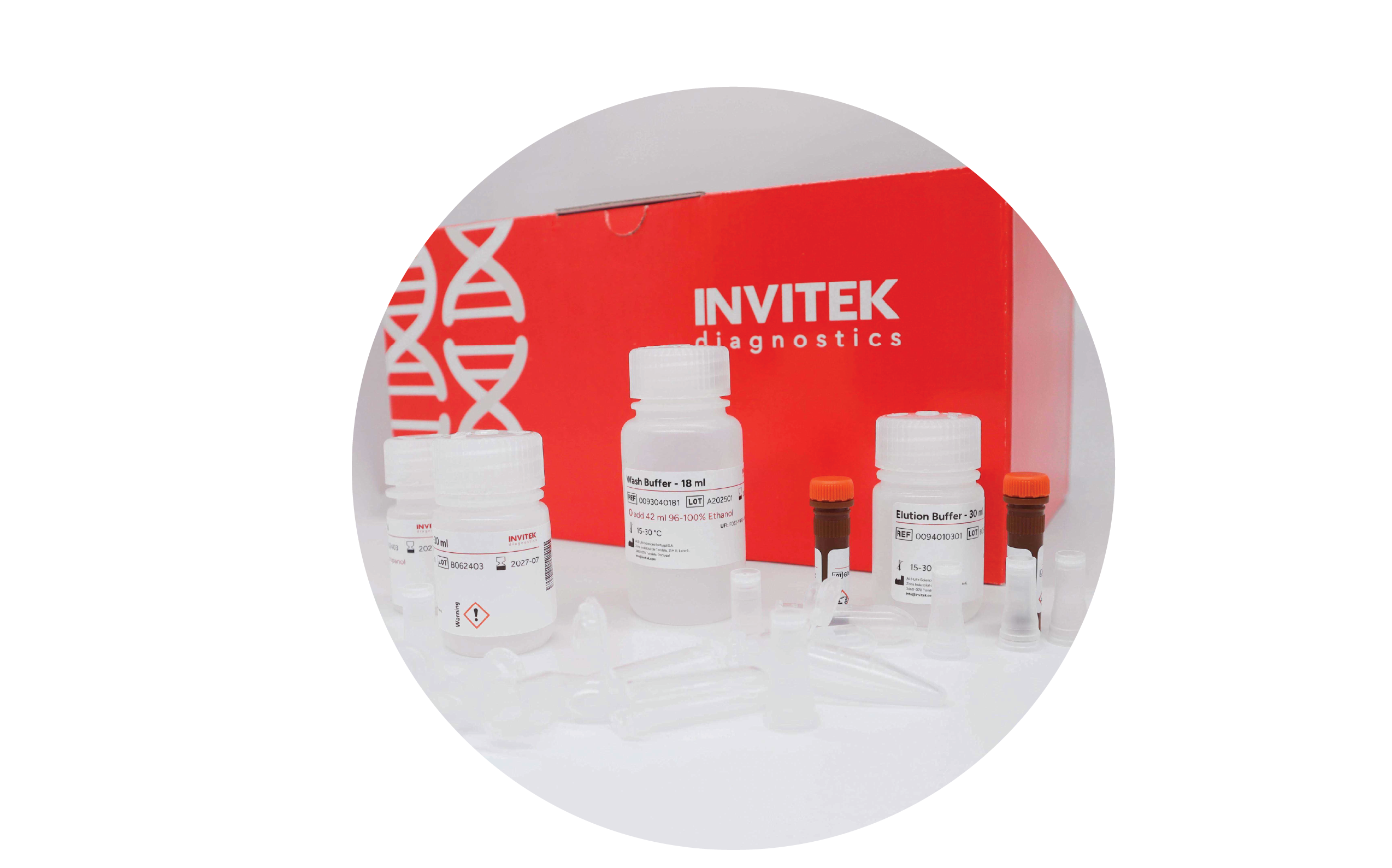
InviSorb® Spin Tissue Mini Kit
Item No.: 1032100200 & 1032100300
Highlights:
- More intact DNA: no DNA degradation by using a gentle, low-salt (non-chaotropic) buffer system
- High yields and purity: up to 50 μg DNA, free of contaminants and inhibitors
- Optimized protocols for a variety of tissue sample types
Product Details
The InviSorb® Spin Tissue Mini Kit simplifies genomic DNA purification from a variety of tissue types. In addition the kit also can be used for food and feed products of animal origin. PCR inhibitors, which can interfere with downstream reactions like PCR, are efficiently removed. The optimized sample extraction method produces reliable results, making it an ideal solution for any laboratory working with DNA.
| Specifications | |
|---|---|
| Downstream application | PCR, SNP detection, Sequencing, Cloning, Southern Blotting |
| Target nucleic acid | DNA |
| Starting material |
|
| Yield | up to 50 µg, depends on amount and kind of starting material |
| Quality | A260: A280 1.6 – 2.1 |
| Preparation time | 15 min for 12 samples (without lysis) |
| Elution Volume | 50 – 200 µl |
| Technology | Spin column |
| Certification | RUO |
Resources

Instructions for use - InviSorb Spin Tissue Mini Kit
30 JUL 2025
- Instructions for use, IFU
Ordering Details
| Product Name | Package Size | Catalogue No. |
|---|---|---|
| InviSorb® Spin Tissue Mini Kit | 50 purifications | 1032100200 |
| InviSorb® Spin Tissue Mini Kit | 250 purifications | 1032100300 |
FAQs
-
How can DNA yields from very tough tissues be improved using the InviSorb® Spin Tissue Mini Kit?
The efficiency of DNA isolation requires thorough homogenisation of the sample by mechanical disruption followed by Proteinase S treatment. To improve digestion of tough tissue samples, extend the Proteinase S incubation time at 52 °C to 1-2 hours or even overnight or add additional Proteinase S to the mixture. Vortexing/shaking the tube during lysis also increases the efficiency of lysis.
-
What is the composition of the Elution Buffer?
Elution Buffer: 10 mM Tris pH 8.5 – 9
-
Why does the InviSorb® Spin Tissue Mini Kit contain Proteinase S and not Proteinase K?
The performance of different proteinases was empirically tested with Lysis Buffer G as part of the InviSorb® Spin Tissue Mini Kit. The reason for using Proteinase S is that it performs better in the specific lysis buffer than Proteinase K.
-
What is the average yield that can be expected from different types of tissue?
Sample Average Yield Liver (20 mg) 10 – 30 µg Brain (25 mg) 5 – 15 µg Heart (25 mg) 5 – 15 µg Kindney (40 mg) 20 – 50 µg Mouse tail (1.2 cm) 10 – 30 µg Rat tail (0.6 cm) 15 – 50 µg
.png?h=2160&iar=0&w=3238)